
SpaceX IPO Ends the Buyback Era
Enjoy the show, don't frontrun the unlocks

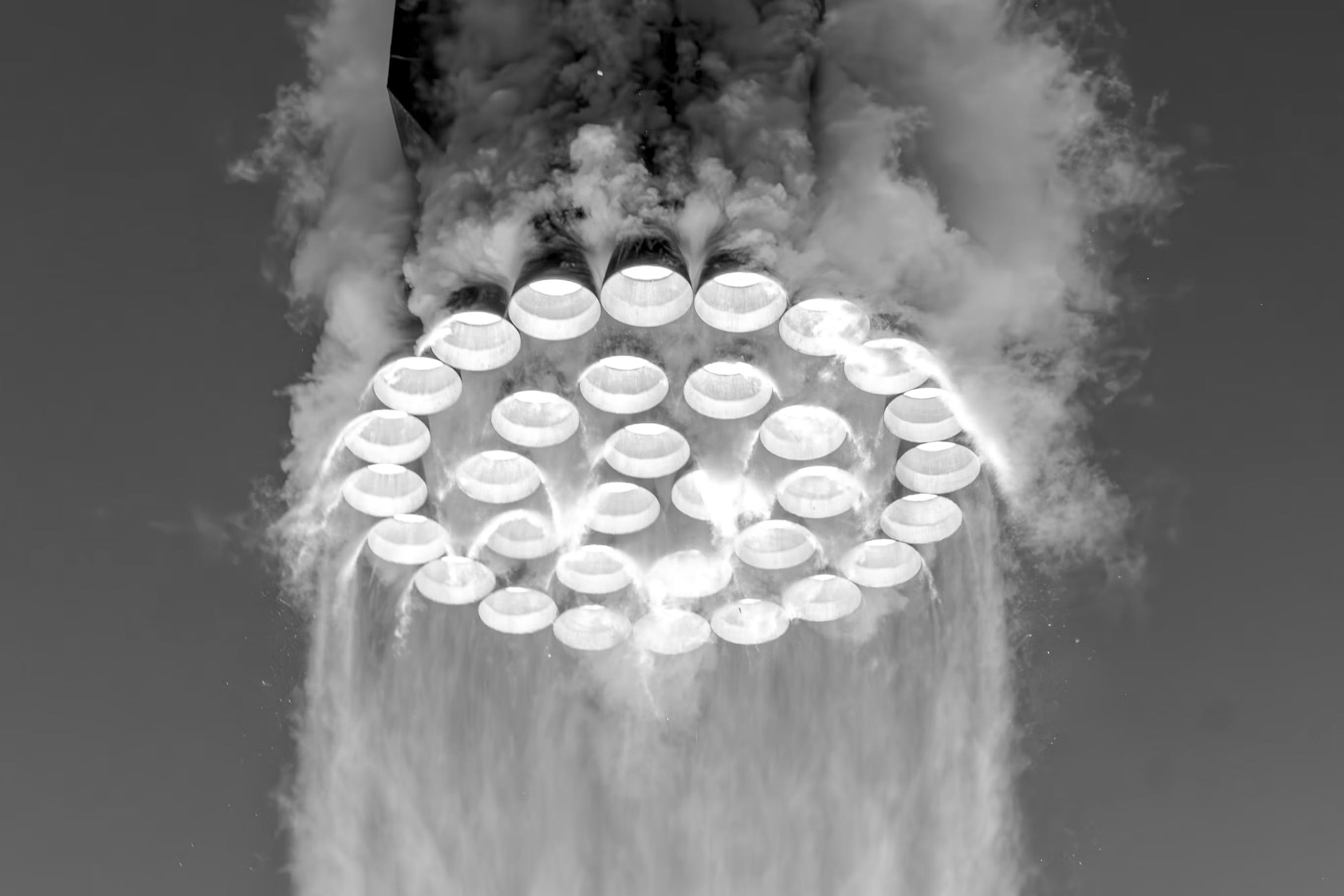
Since Friday, SpaceX SPCX 0.00%↑ is public. Or is it? Technically, “the biggest IPO in history” had a float of merely 4.3%—this is how much of the company is actually public. Not a record among big IPOs—Aramco’s 1.5% is in a league of its own—but isn’t that interesting? One of many conversation starters here.
The First Trillionaire
Two days ago, Musk officially became a trillionaire. How much is a trillion? A million seconds is over 11 days. Can you tell how much a trillion seconds is? A year? 10 years? 100 years?
It’s almost 32,000 years.
My first question is: what does it even mean? The company is not even profitable, yet the market estimates its capitalization at over 2 trillion dollars. You can blame the massive money printing, or the erosion of investing fundamentals caused by the crypto hype era, but it’s obvious that the numbers are detached from fundamentals in any meaningful way. You can only make comparisons with other assets, and those are not looking reasonable in a traditional sense either. By some estimates, OpenAI is valued around 30x sales; SpaceX easily crossed 100x.
The Float-Restriction Premium
What makes it possible is the hero of the first paragraph: the tiny 4.3% float. It means that the overwhelming majority of shares can’t be sold yet, while demand for a piece of one of the most exciting companies on the market is enormous. Thin supply, and the price does the only thing it can. It pops.
Traditionally an IPO price is the marginal seller meeting the marginal buyer, but this time 96% of holders are locked out. The price you get reflects scarcity, not value.
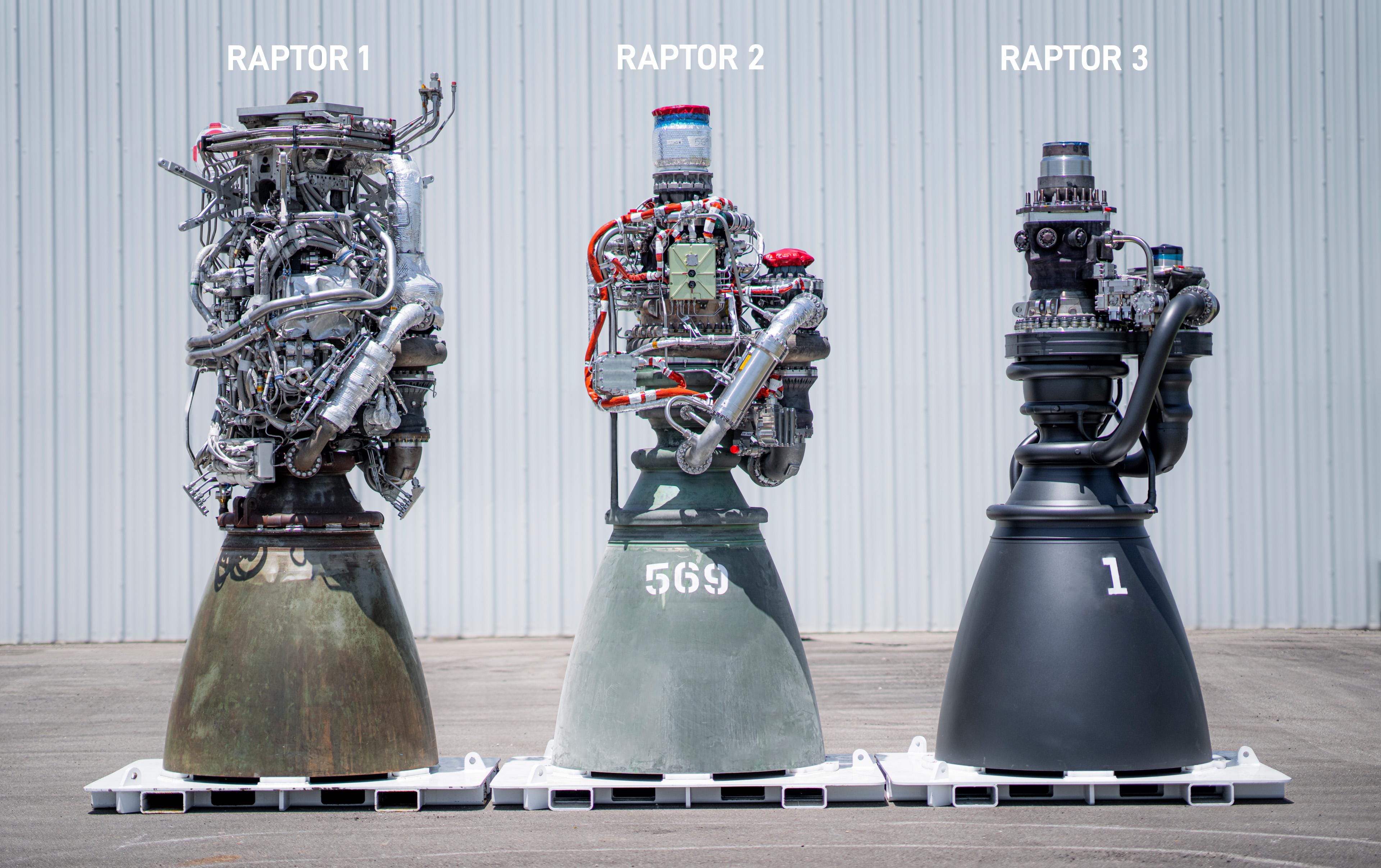
Then there is the engineering, and it’s a Raptor 3 level (or should I say SPAC level?):
SoFi runs a 30-day anti-flipping window and has threatened fees for selling within the first 120 days. Fidelity dropped its maximum IPO balance to attract small accounts. Nasdaq-100 admission just 15 trading days after listing, Russell 1000 in five. Only the S&P 500 held its rules and declined to fast-track. Looking at the plumbing: retail is herded into the most expensive offering in history, threatened with penalties for leaving, and held in place until index funds are forced by the rules to buy billions, regardless of price.
End of the Buyback Era
For two decades the US market mechanically shrank—buybacks, fewer IPOs, public companies going back private. Tech companies were asset-light, and often the best use of cash was buying back their own stock; Meta raised ~$16B in 2012 and then spent over $100B repurchasing shares. Fewer and fewer shares were left to buy, and that pushed prices up.
That era ended this week. In the AI season, the asset-light giants become asset-heavy: data centers, Nvidia chips, power plants, rockets. Goldman sees $675B of new equity hitting the market this year. SpaceX’s $75B record raise covers less than a third of the roughly $235 billion in commitments one analyst totaled through 2030.
Don’t Frontrun the Unlocks
SpaceX is one of the most exciting companies of my lifetime. That said, the price we saw on Friday contained almost no information about the business, and almost all of it was about the mechanics. There are no sellers, because they’re locked up. Literally, only 4.3% of the stock is in circulation.
The 95% lockup is not forever. The first real unlock hits after Q2 earnings, and unlocks continue for the next year until Musk’s stake unlocks in Jun ’27. Besides Musk, there are two main groups that are currently locked:
180-Day group — This is the bulk of SpaceX’s pre-IPO shareholders: employees, early investors, and other insiders on the standard ~180-day lock-up, but with the cliff broken into a staggered ladder of fixed milestones and post-earnings windows rather than a single release.
Extended group — These are typically the larger or more senior holders the company wanted held back longer to avoid concentrating supply, releasing in smaller batches across the Q4’26 through Q1’27 earnings windows and the spring 2027 milestones.
So here is the schedule:
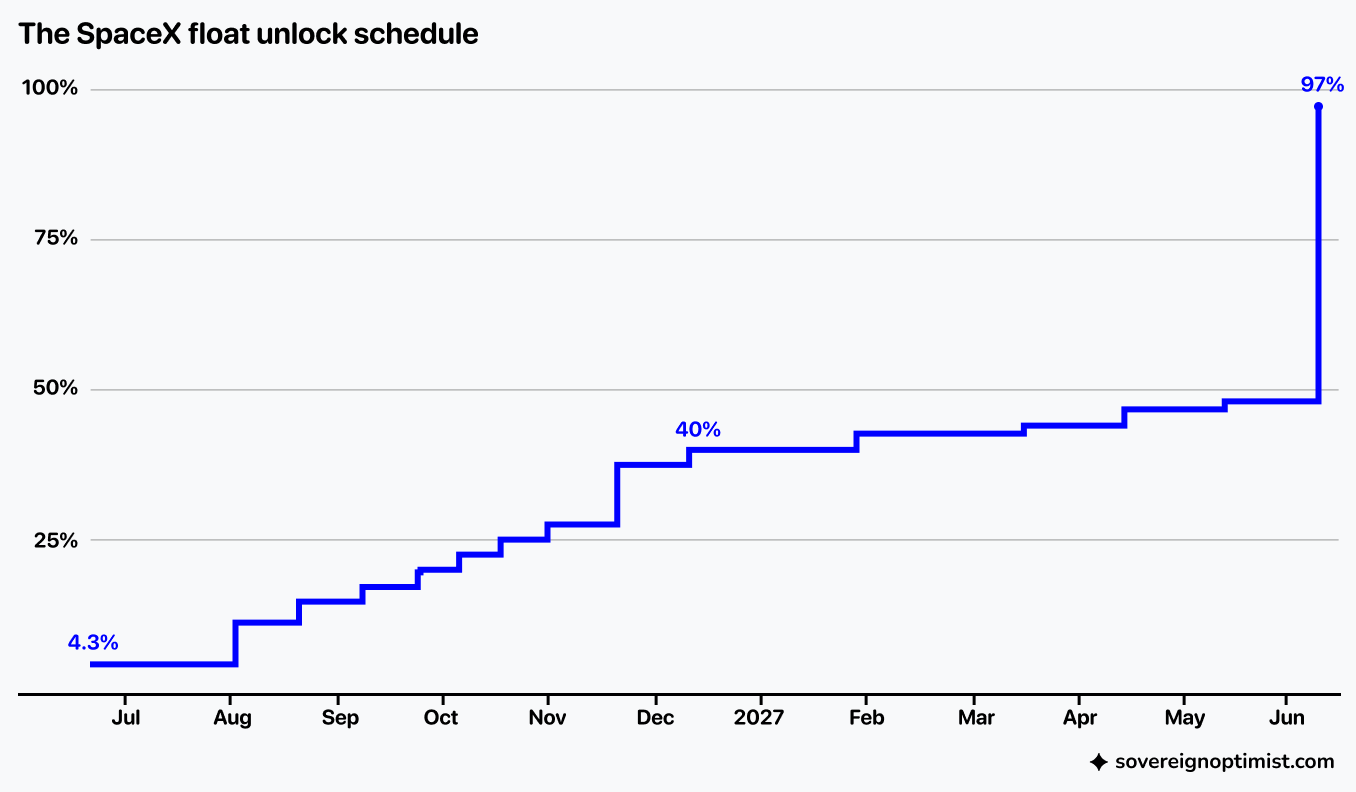
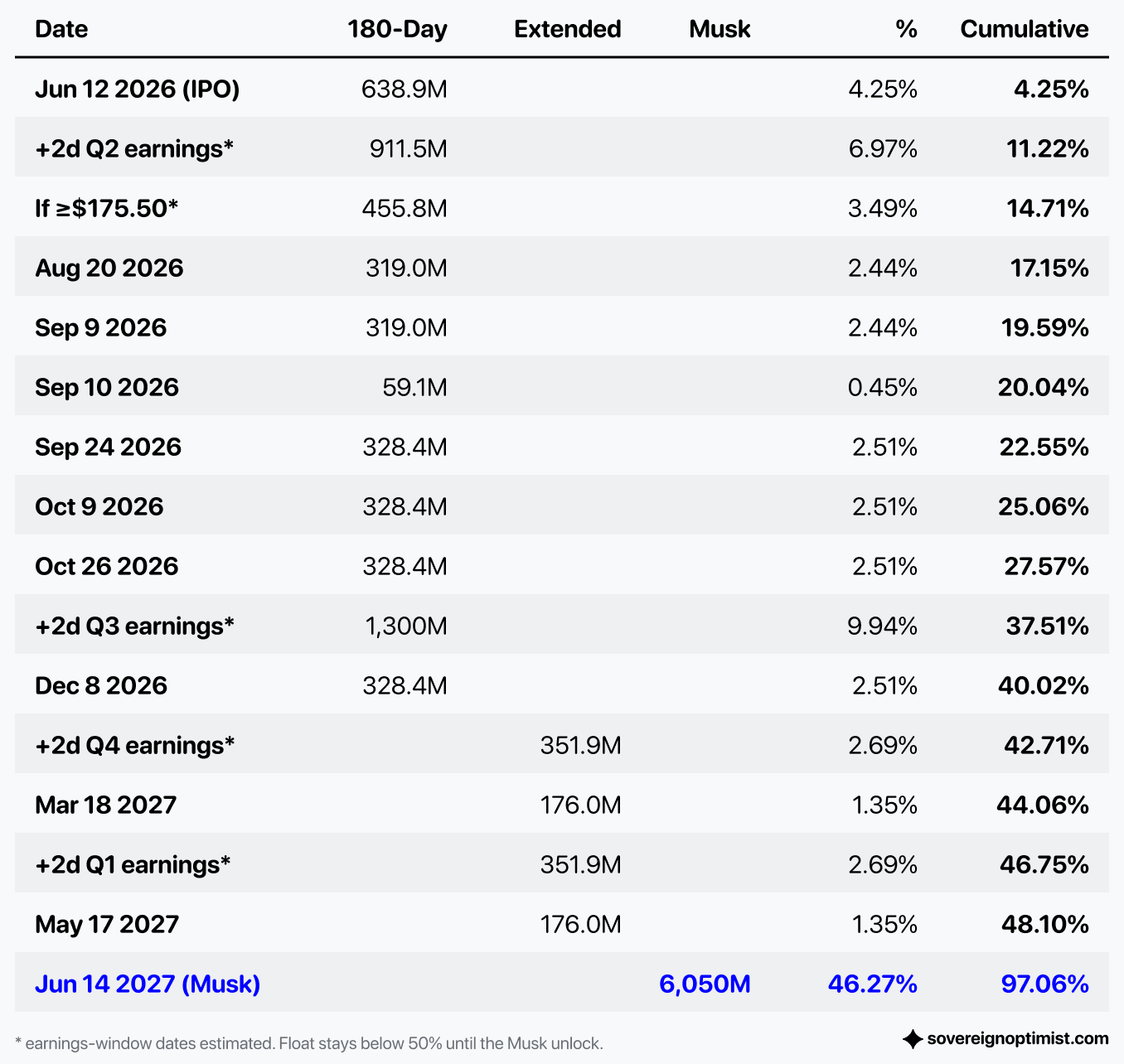
Even if you believe Musk will never sell, there is less than 5% of the stock in circulation, and among those still locked there are many first-time millionaires, or early investors who have waited for this moment, sometimes for over 20 years. While today’s investors buy dreaming about future fortunes, there are people for whom this long-awaited moment is coming now.
There is no price discovery before this cohort joins the market.
I’m waiting.
In the meantime, after 2 weeks, the six Nasdaq bots are all down, “buying the dip.” I publish results weekly in our private Discord.
Ive already joined great to be back
great read good work Jan been busy work projects will get back active again in discord can you send discord link